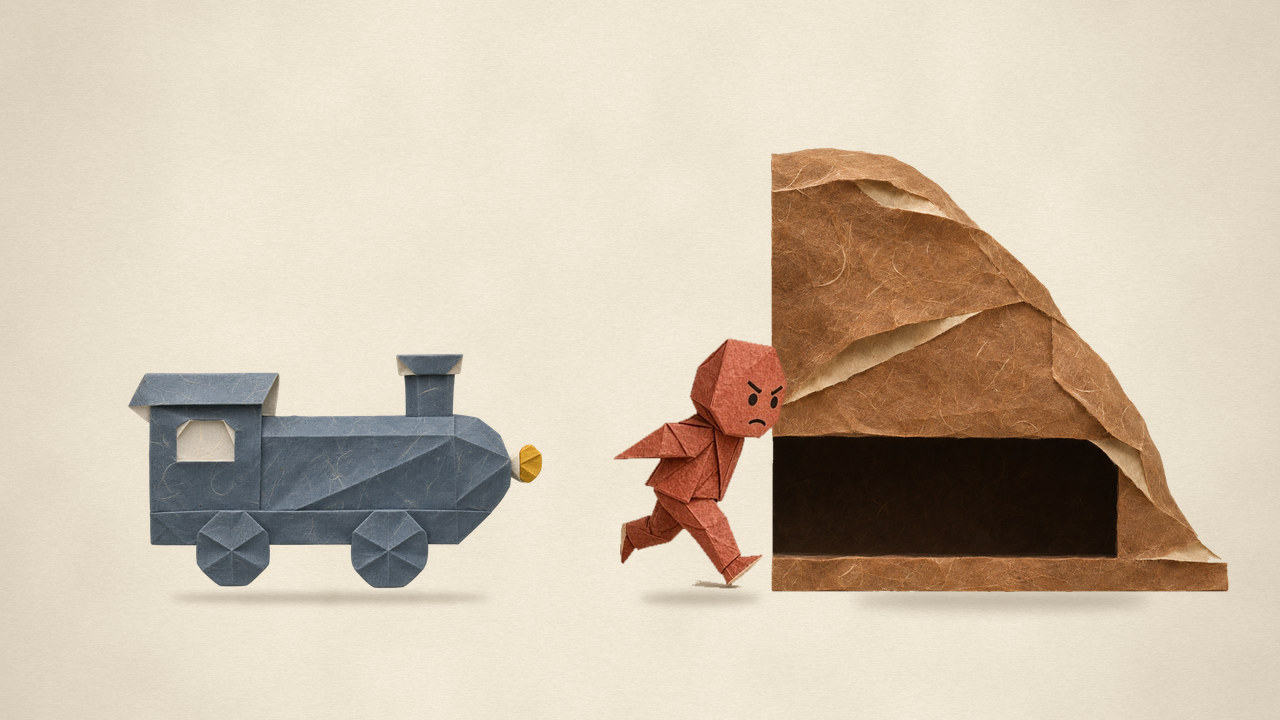
The Tunnel
A man is a quarter of the way into a railway tunnel when he hears a train coming. He can run back the way he came, or on towards the far end.
A man is a quarter of the way into a railway tunnel when he hears a train coming. He can run back the way he came, or on towards the far end.
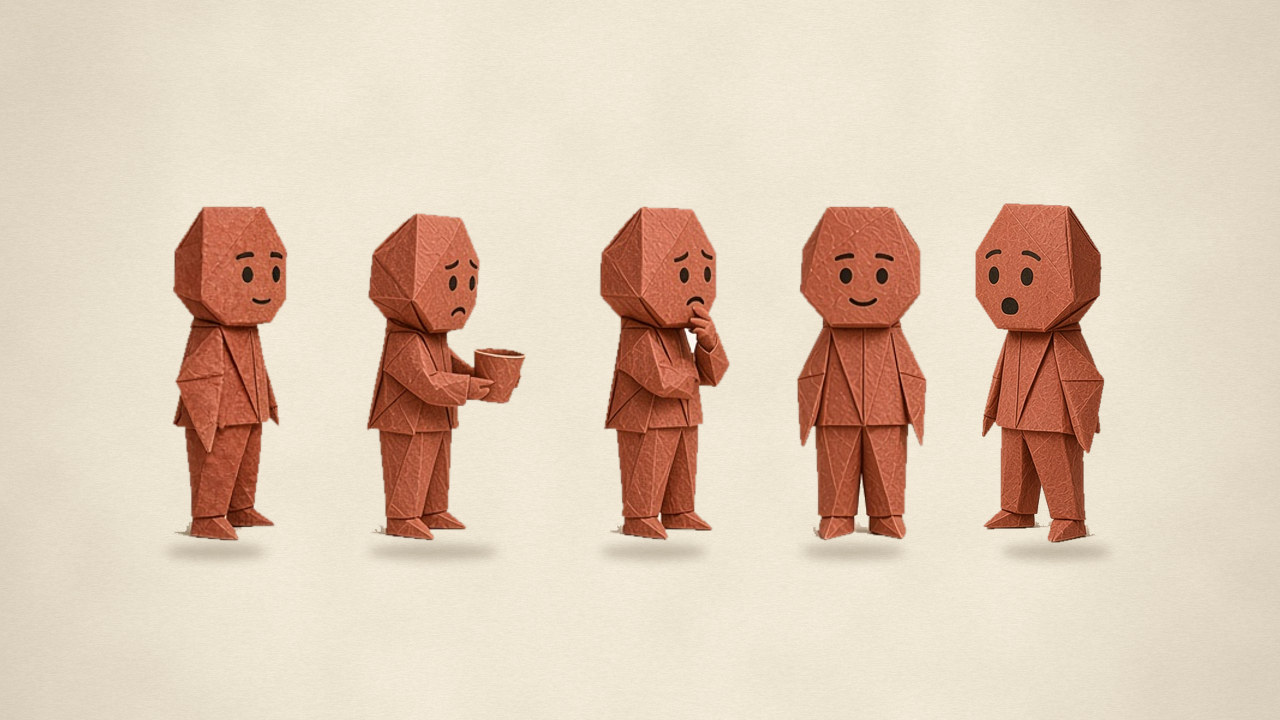
A king has a thousand bottles of wine and exactly one is poisoned. A sip is enough, but it takes a full hour to act and nothing shows before then. The feast is in one hour. He has ten tasters.
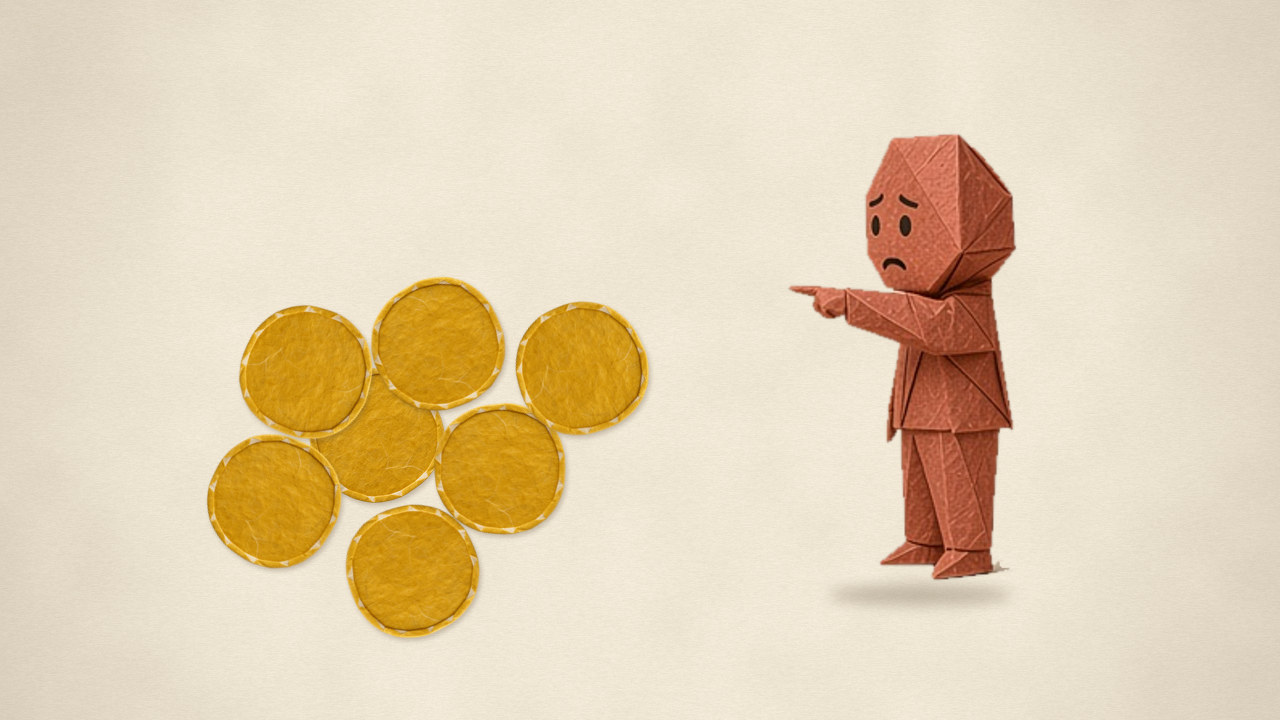
Start with a pile of counters. Split it into two smaller piles and write down the product of their sizes. Split one of those, write down that product too.
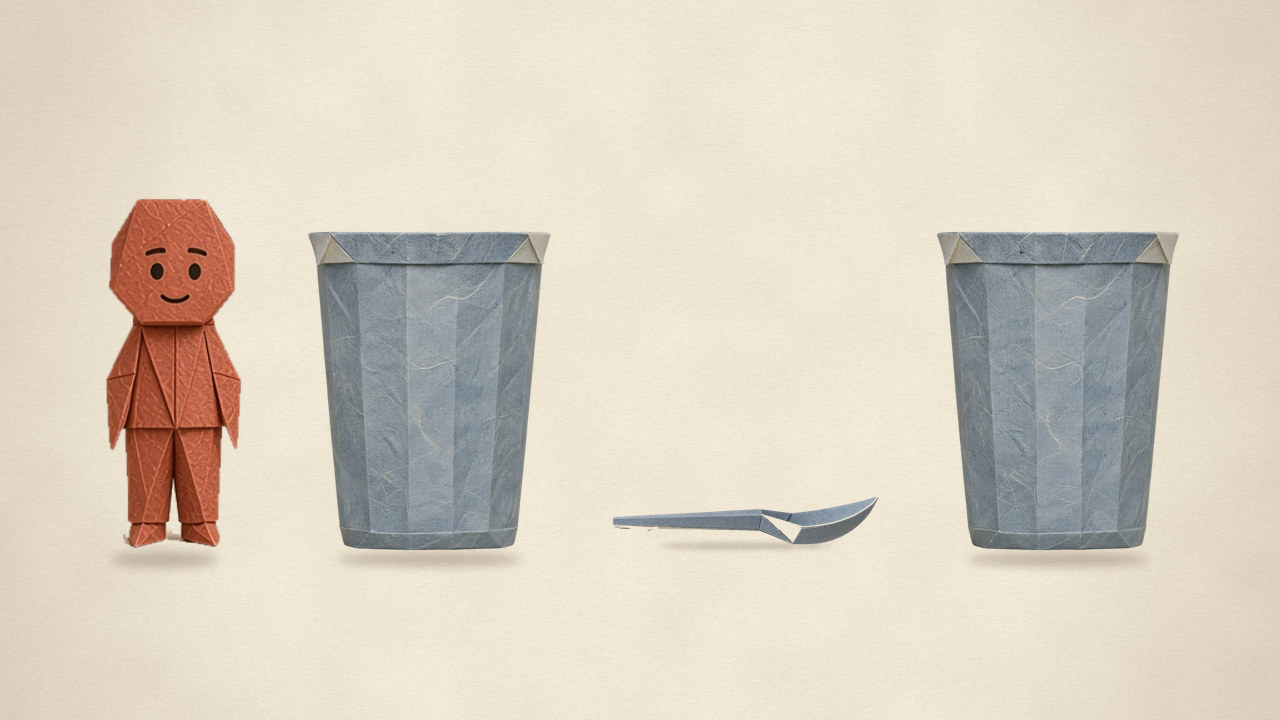
A glass of wine and a glass of water, the same amount in each. Take a spoonful of wine, stir it into the water. Then take a spoonful of that mixture and stir it back into the wine.
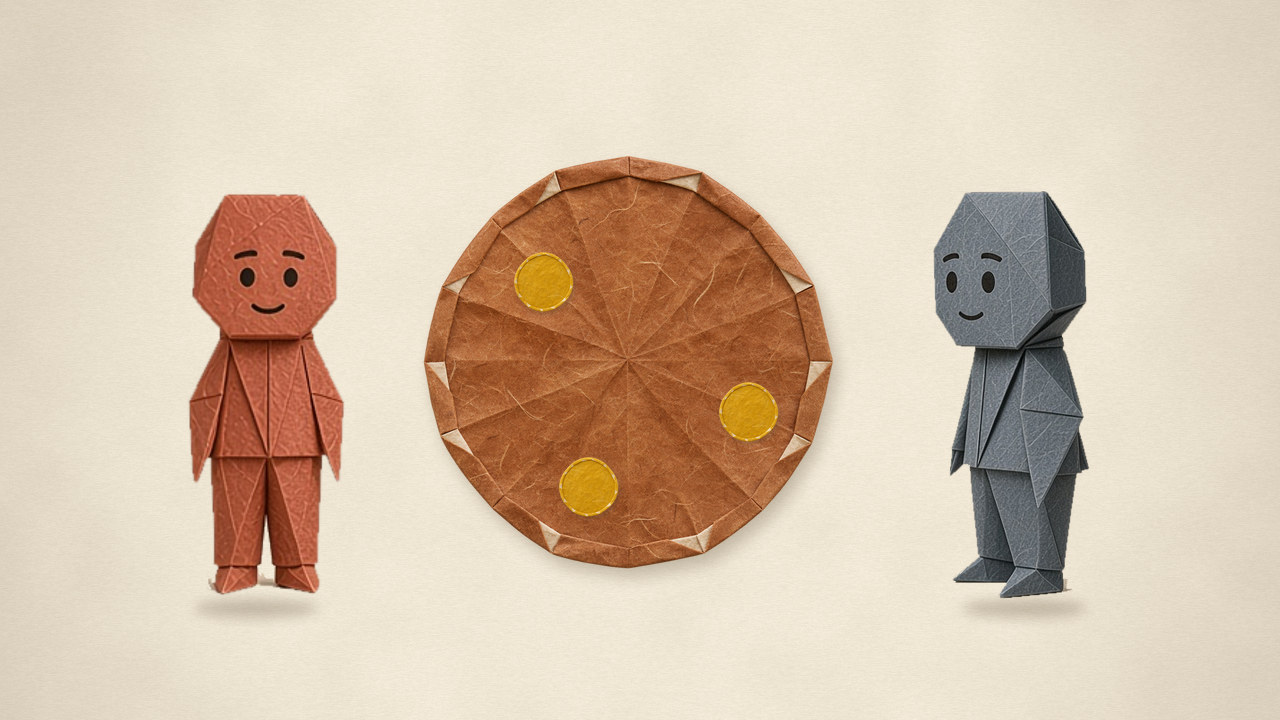
Two players take turns putting coins on a round table. The coins must lie flat and must not overlap. The first player who cannot find room for a coin loses.
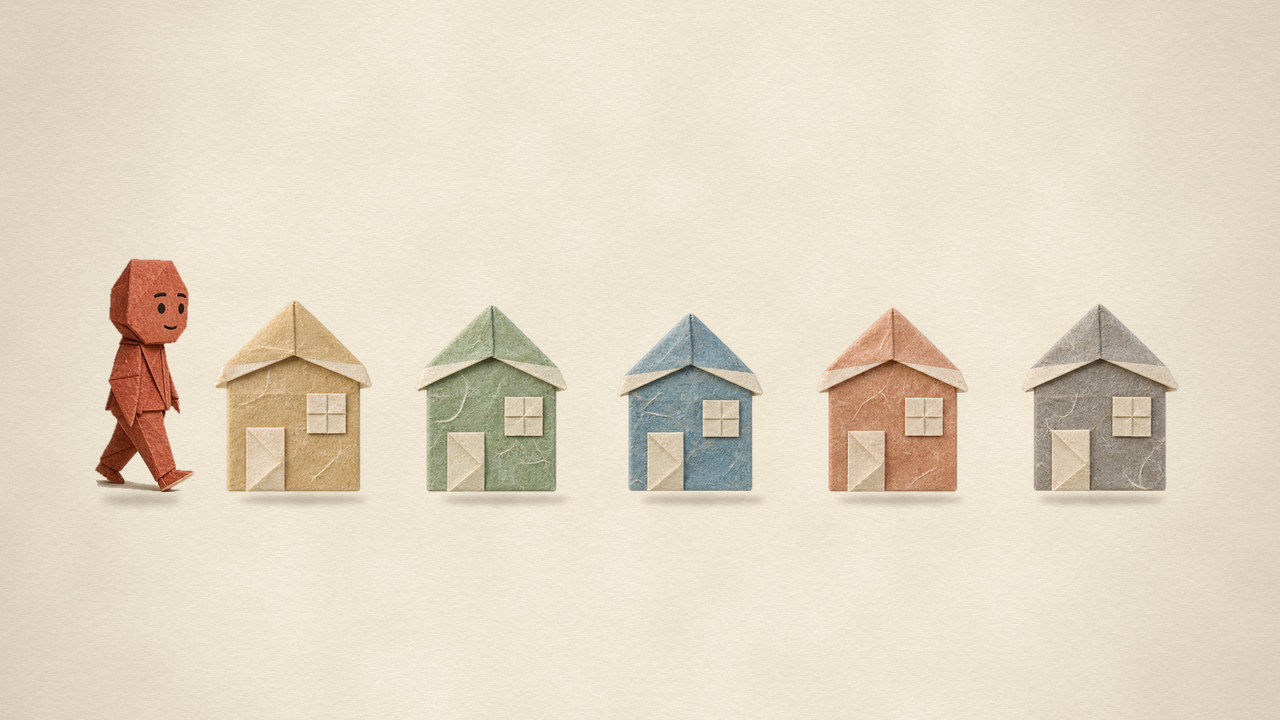
A row of houses, the money in each one known. Rob as many as you like, but never two next door to each other. What is the most you can take?
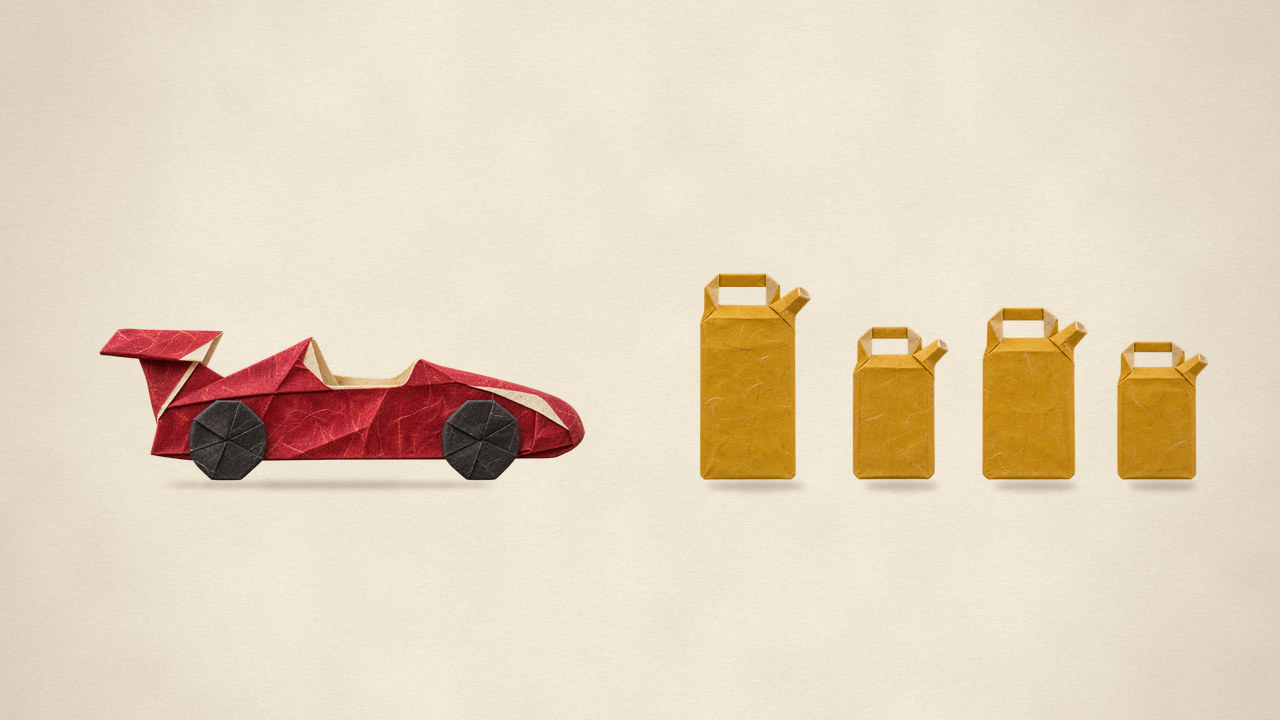
Cans of fuel are scattered around a racetrack. Between them they hold exactly enough petrol for one lap — not a drop more, not a drop less. Your tank is empty, you may start beside any can you like, and you pick up each can as you pass it.
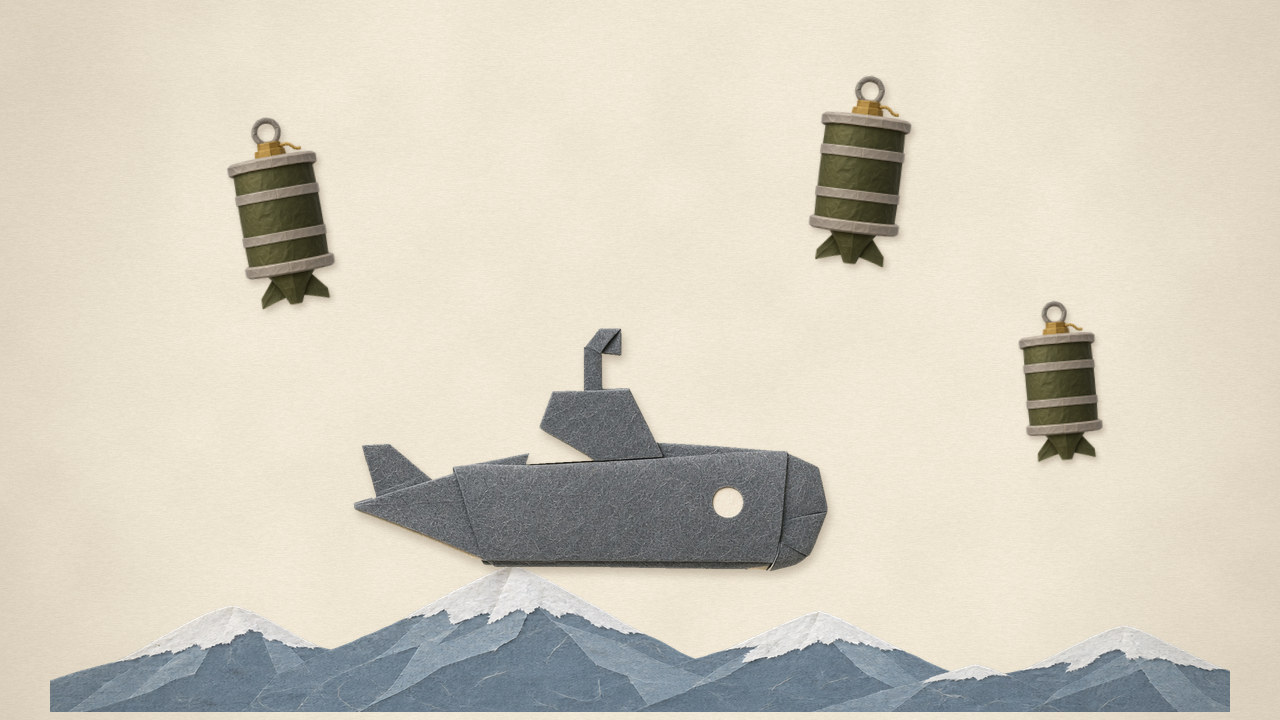
Your job is to sink a submarine, and you get exactly one move a turn: drop a depth charge on a single whole number. A hit sinks it. A miss tells you nothing at all — no warmer, no colder.
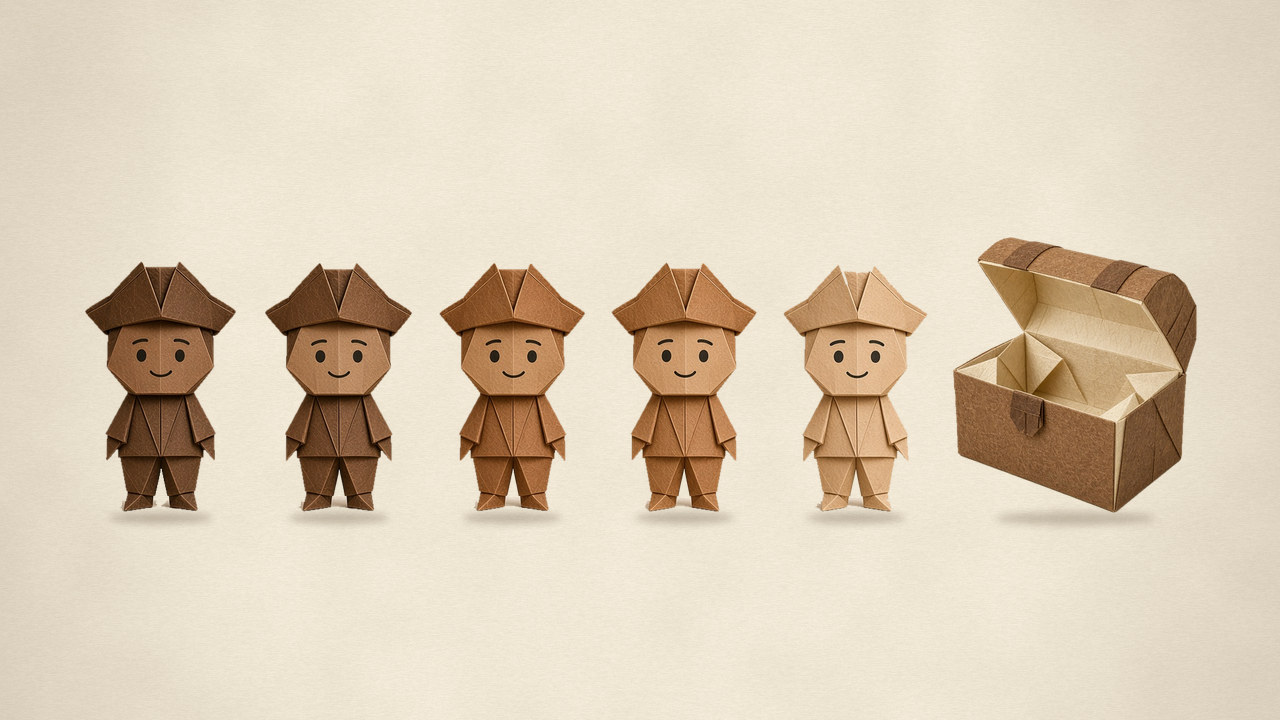
Five pirates, a hundred gold pieces and a strict order of seniority. The most senior proposes a split and everyone votes. What does he propose?
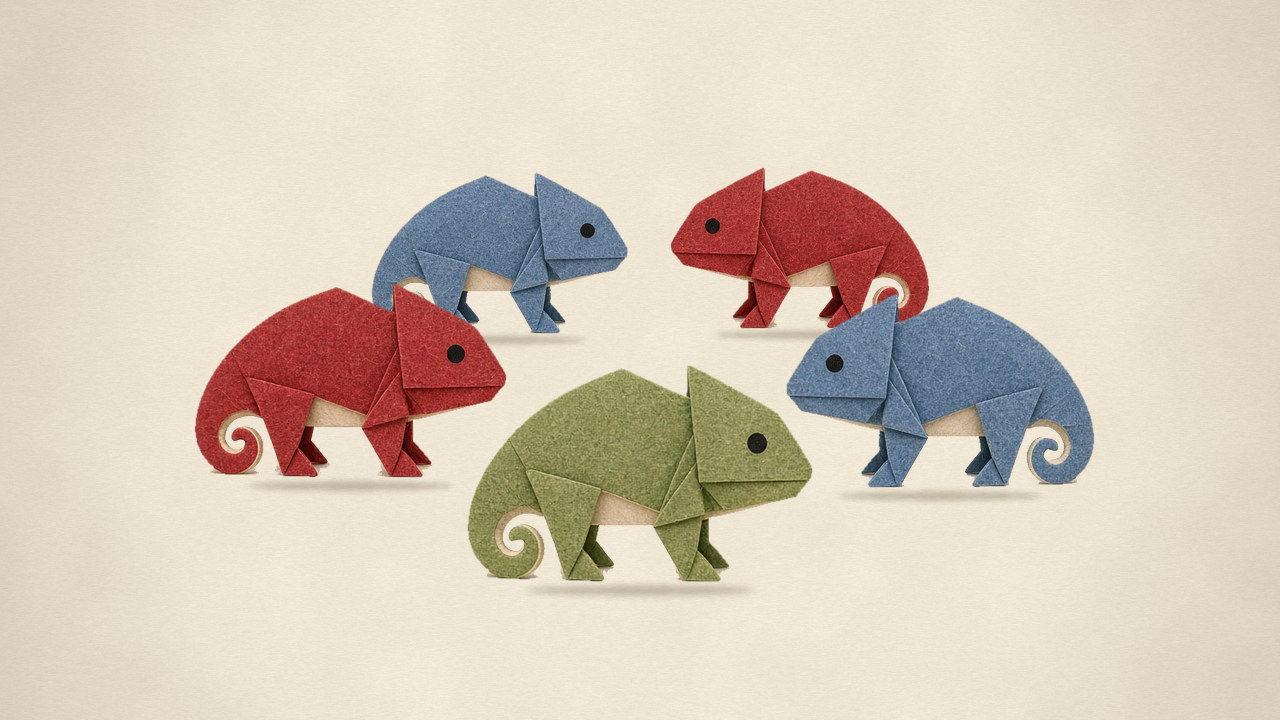
An island with forty-five chameleons: thirteen red, fifteen green, seventeen blue. When two of different colours meet, both of them turn into the third colour. Two of the same colour meet and nothing happens.

A rope lies snug around the Earth's equator. Add one metre, then lift it evenly all the way round. How high does it sit?
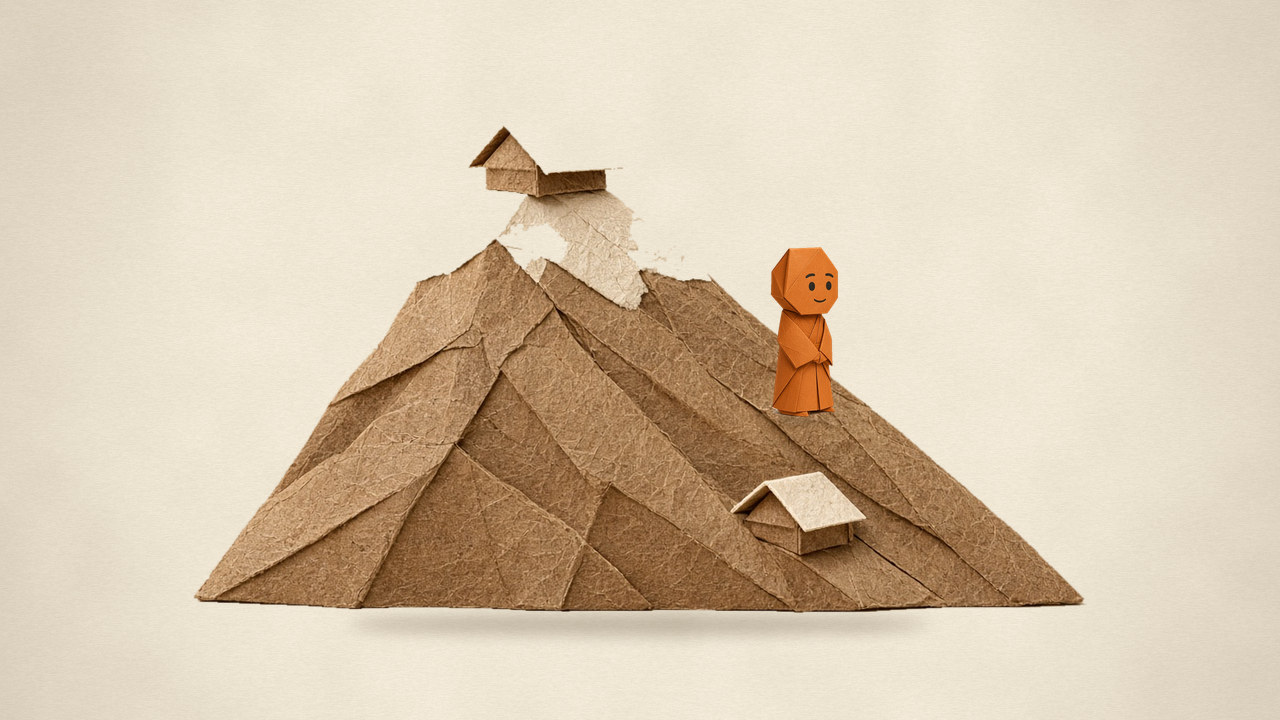
A monk leaves the monastery at the foot of a mountain at dawn and walks up the path. He goes exactly as he likes — fast, slow, a rest, even turning back for a while — and reaches the top at dusk.
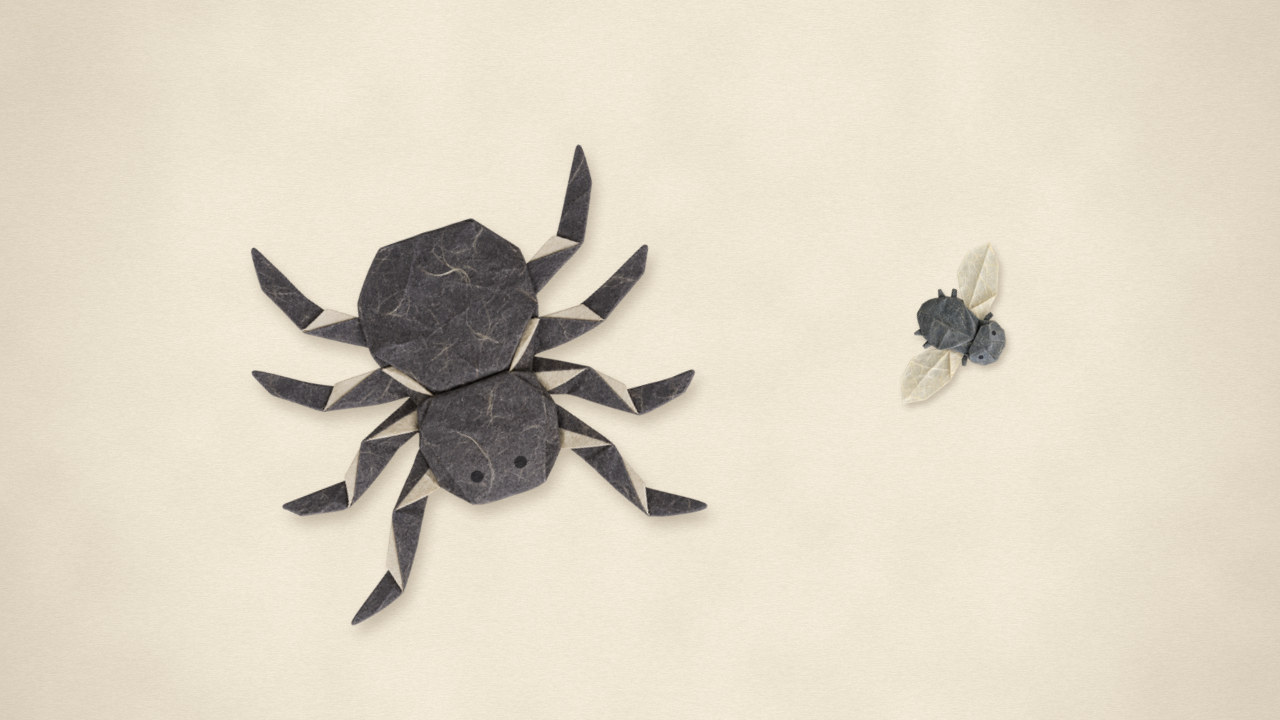
A room thirty feet long, twelve wide and twelve high. A spider sits on one end wall, halfway across, a foot below the ceiling. On the far wall, a foot above the floor, a fly is asleep.
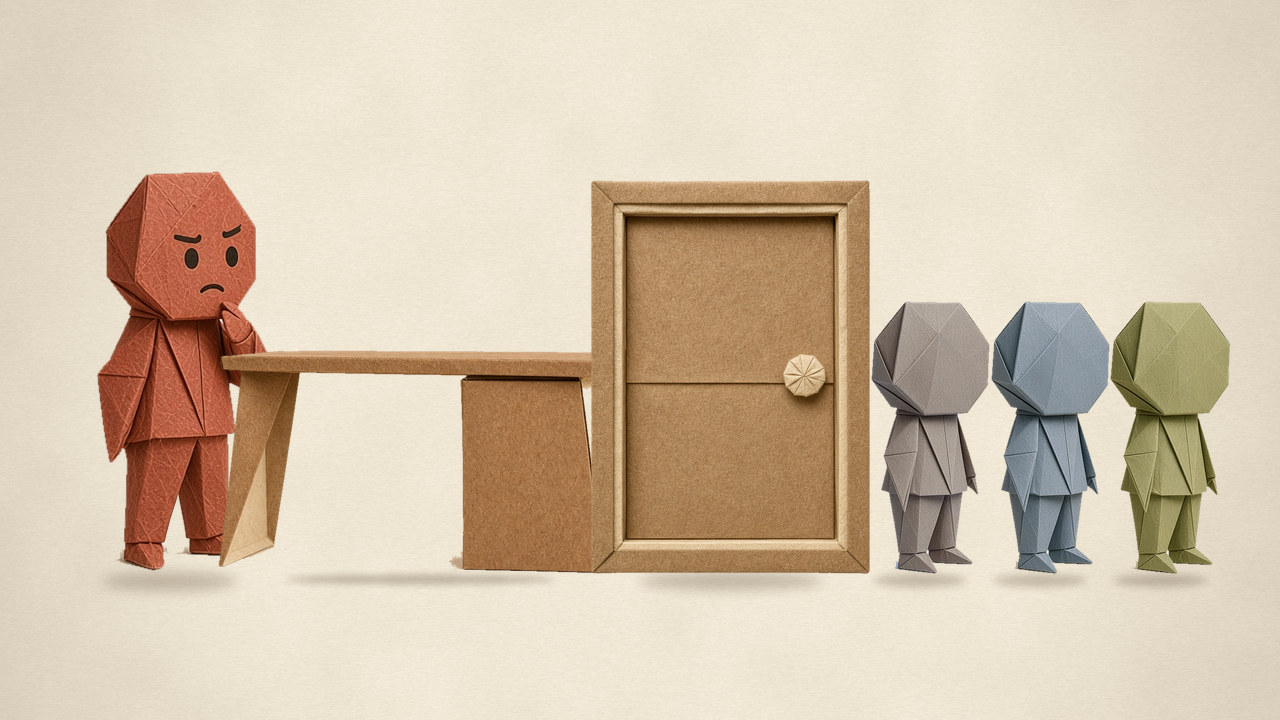
A hundred people want the job. He interviews them one at a time, in a random order, and after each interview he has to say yes or no there and then — a no is for ever, and a yes ends the hiring.
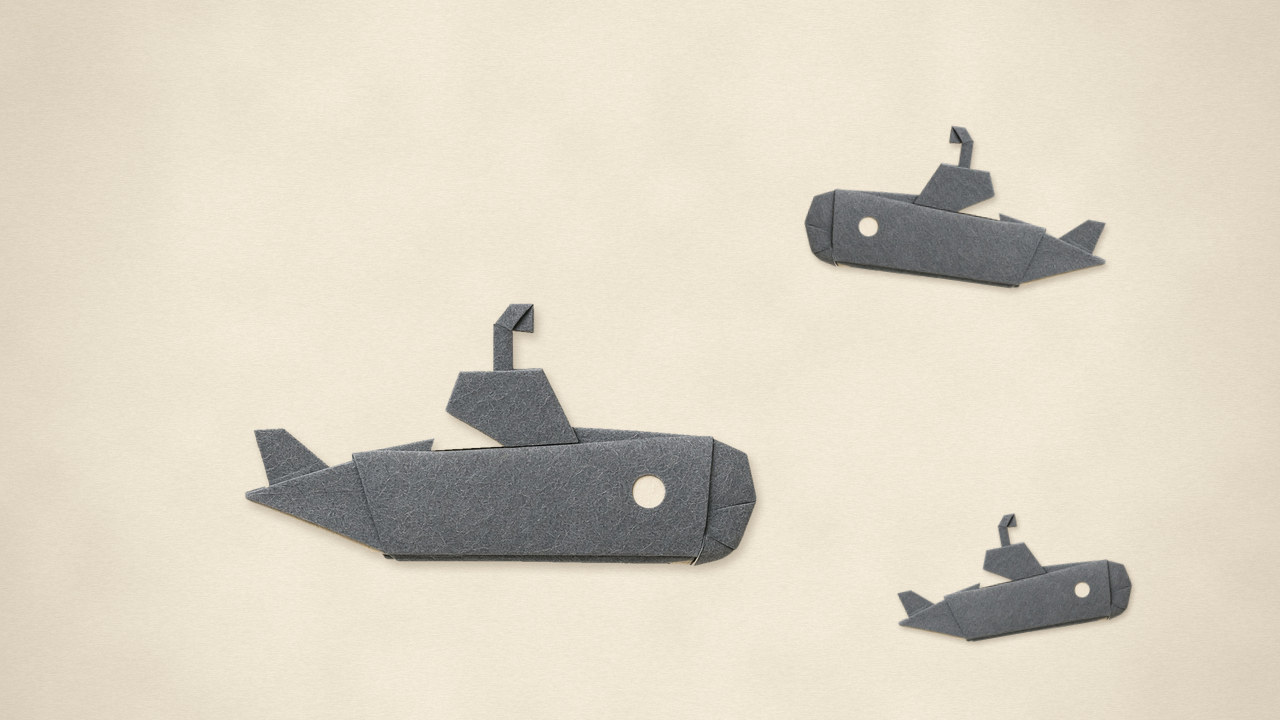
A sequel to The Submarine, and a different kind of film: the puzzle is a two-minute one, and this is the technique underneath it.
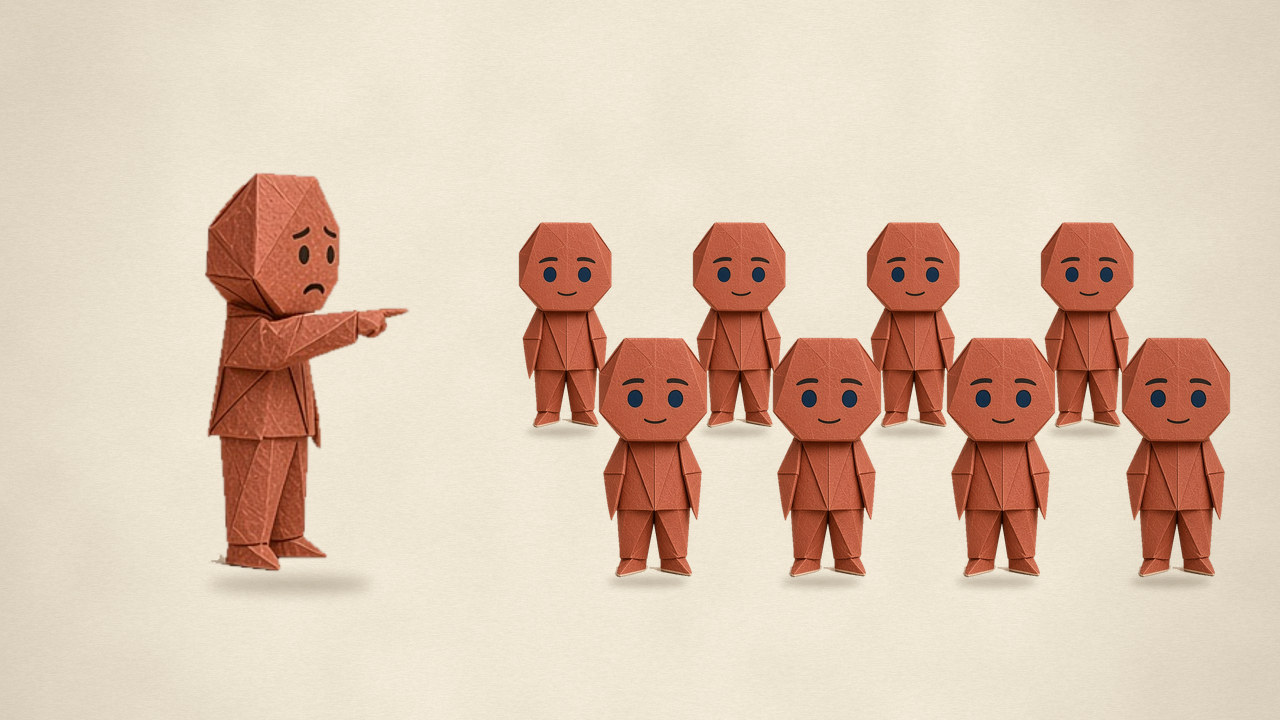
A hundred islanders, all with blue eyes, none allowed to learn their own colour. A visitor says out loud something every one of them already knew. What did he tell them?
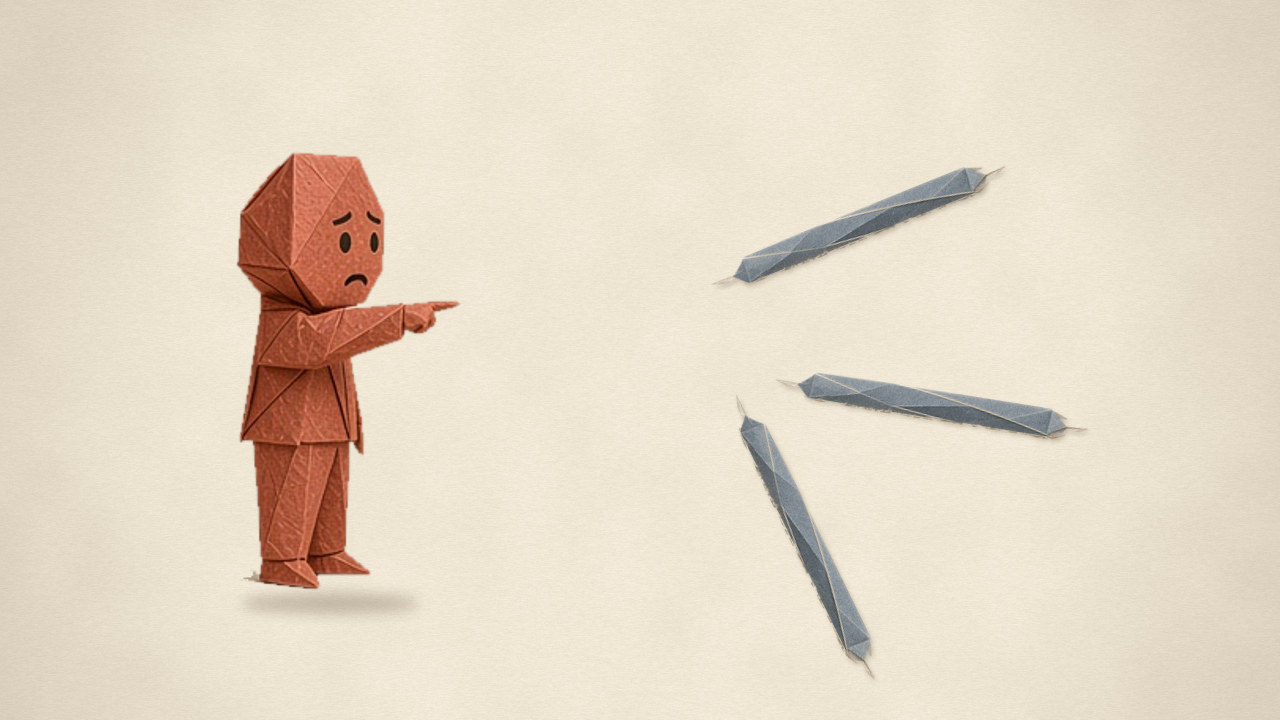
Parallel planks, and a needle exactly as long as a plank is wide. Drop it a thousand times. What fraction of the drops cross a line?
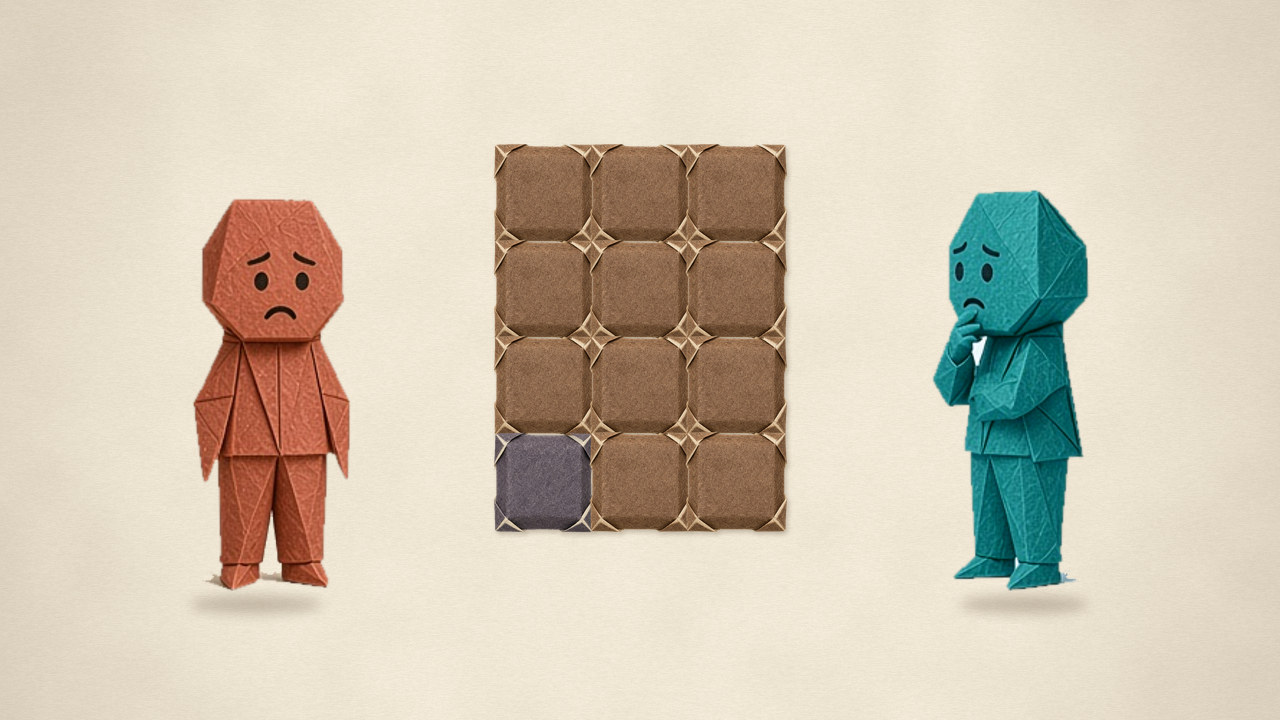
A 6 by 8 bar of chocolate with one poisoned square. Players take turns eating a square and everything above and to the right of it. Who wins, the first player or the second?
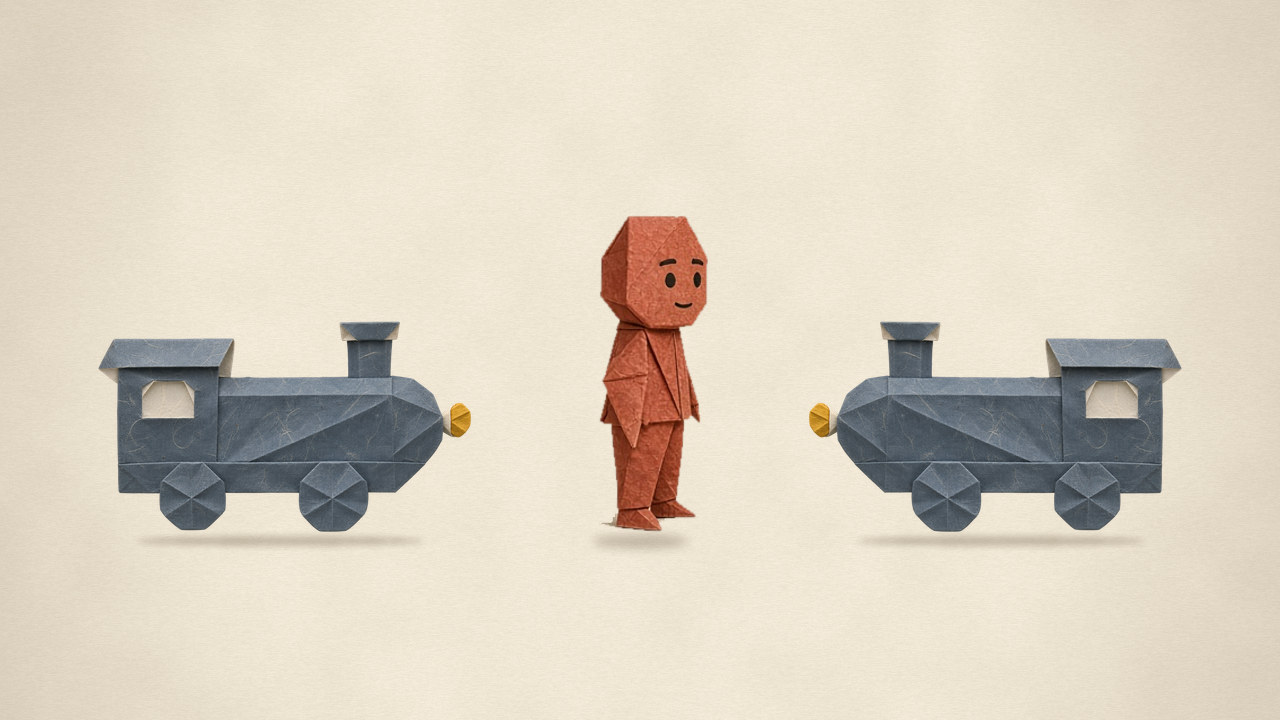
Two trains head straight at each other. A fly shuttles between their noses until they meet. How far does it fly?
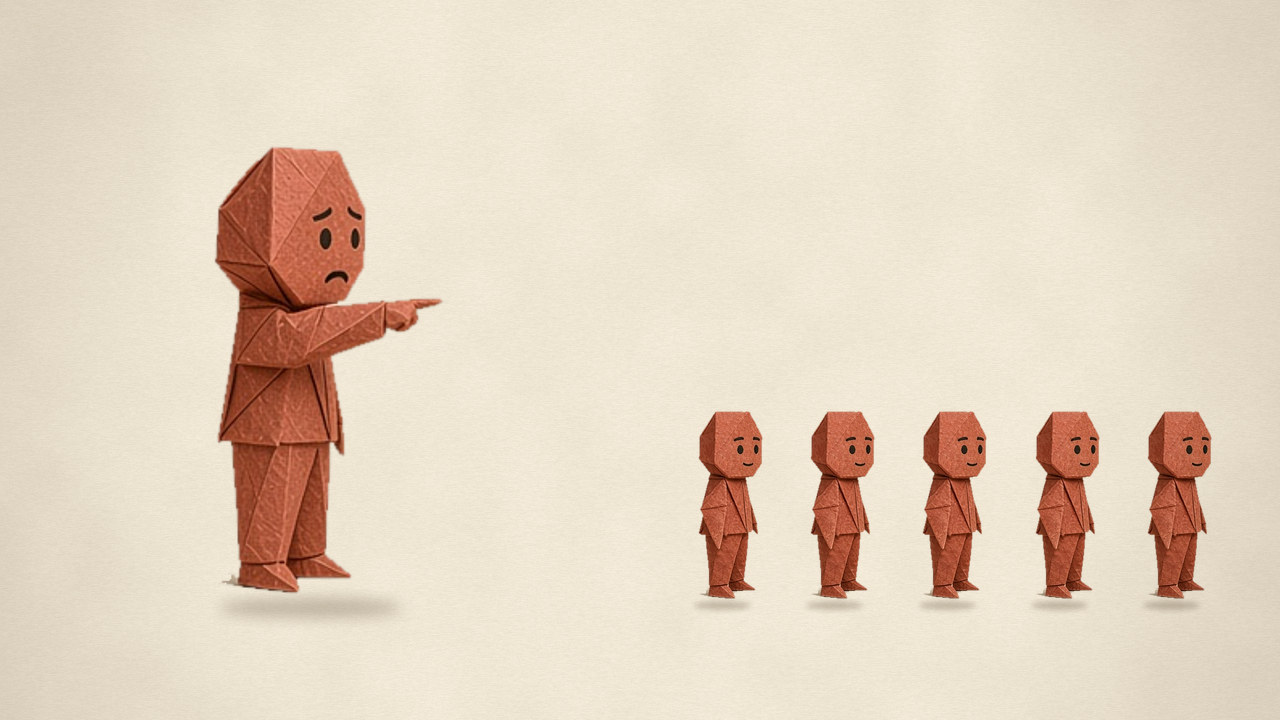
A hundred prisoners each open fifty of a hundred boxes, looking for their own name. All go free only if every one finds it. What are their chances?
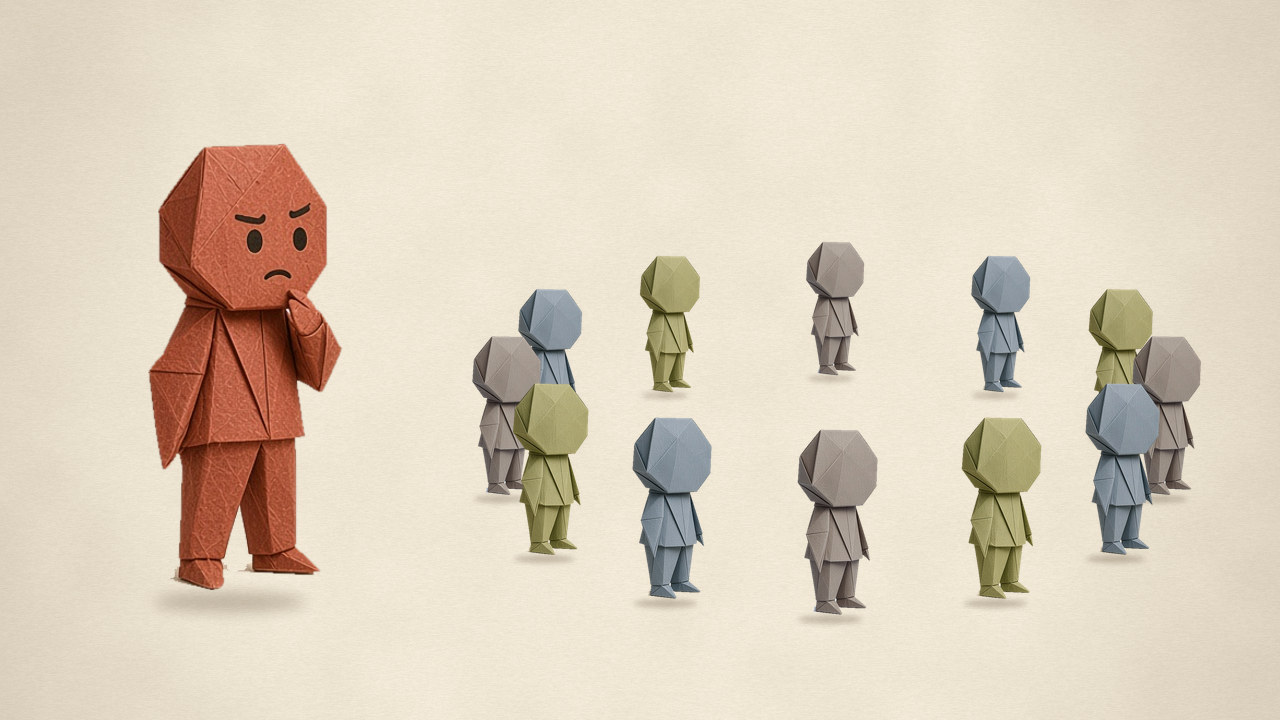
Forty-one people stand in a circle. Every second person still standing is eliminated, round and round, until one is left. Where do you stand?
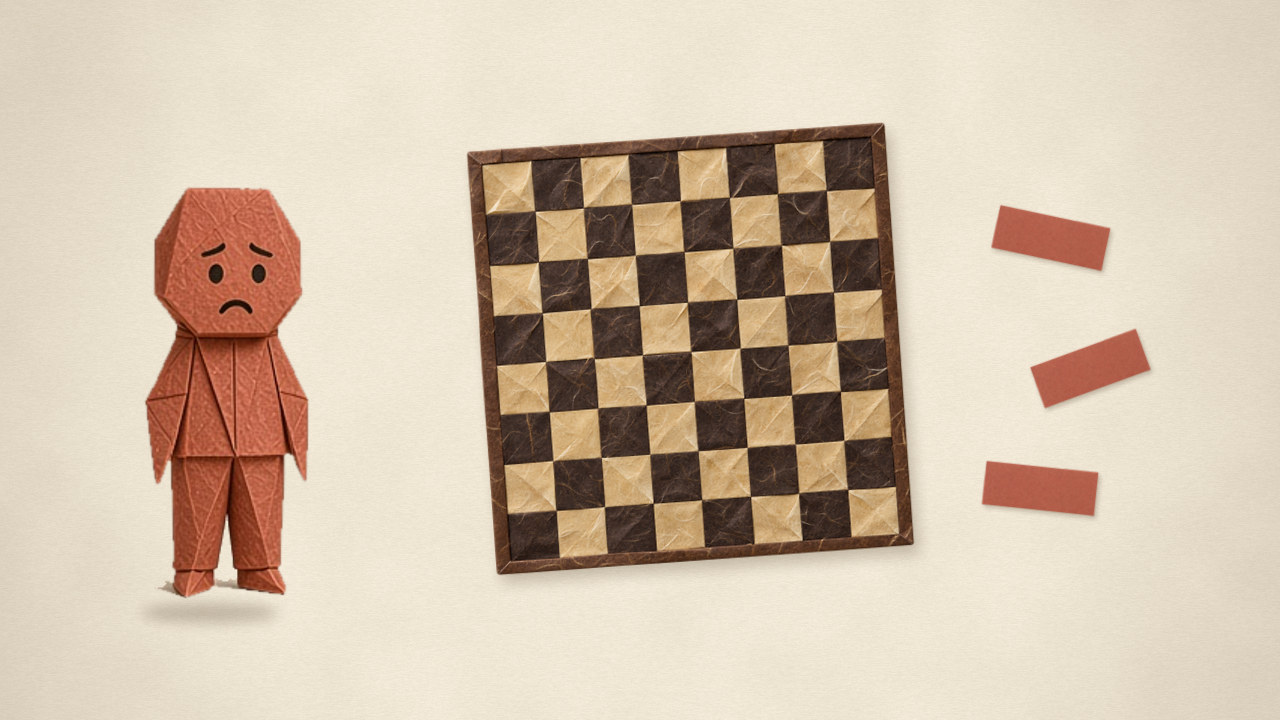
Snap two opposite corners off a chessboard, leaving 62 squares. Cover the board with 31 dominoes.
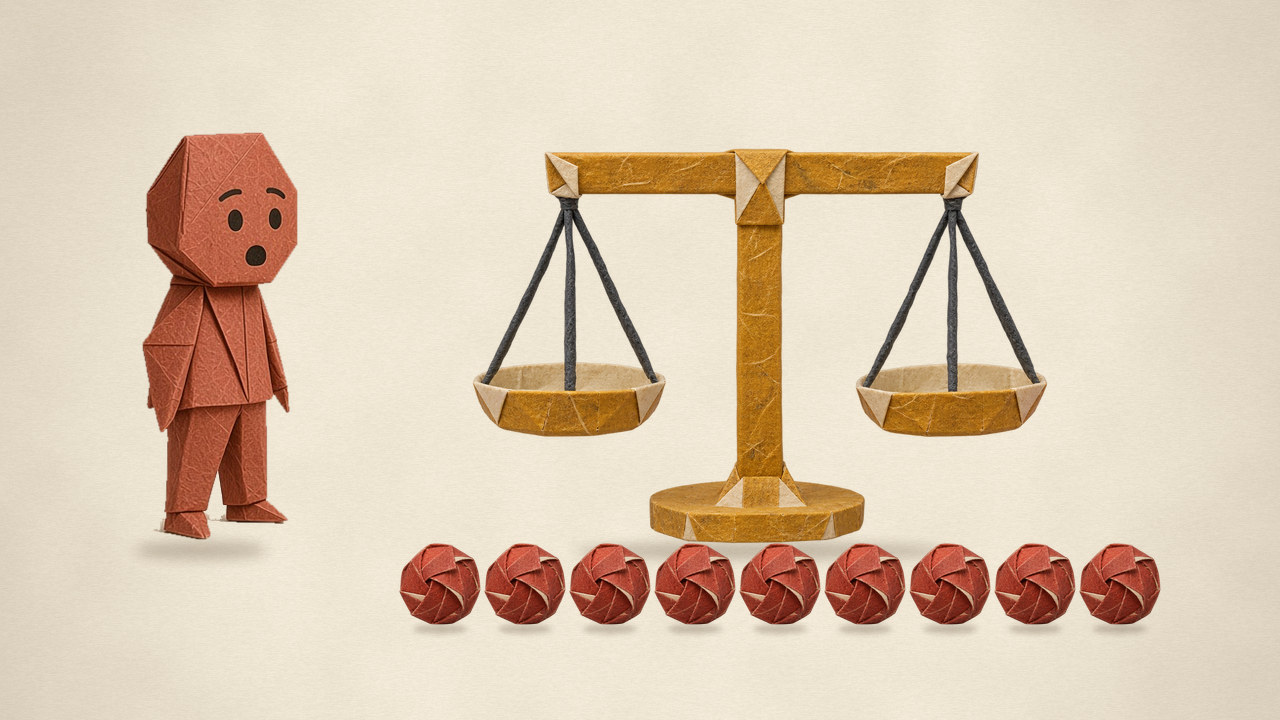
Nine balls look the same, and one is heavier. You have a balance and three weighings. Find the heavy one.
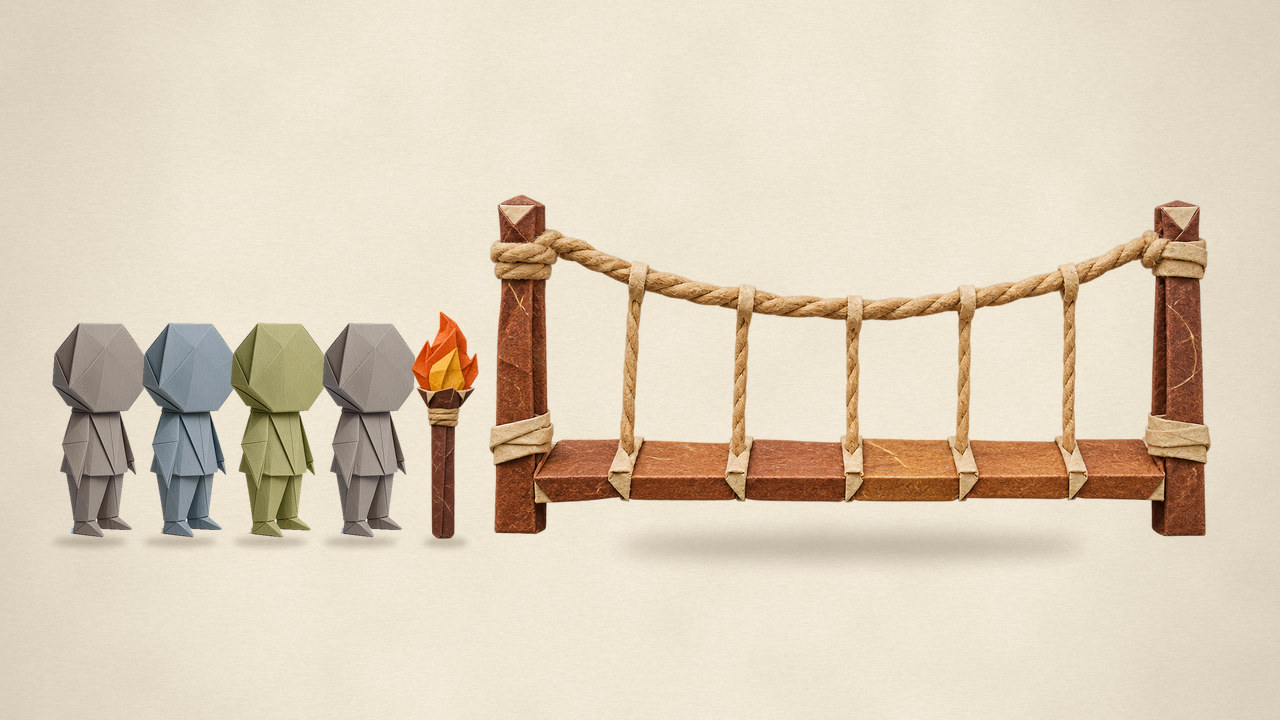
Four people must cross a rope bridge at night, two at a time, with one torch. They take 1, 2, 5 and 10 minutes alone. What is the fastest they can all get across?
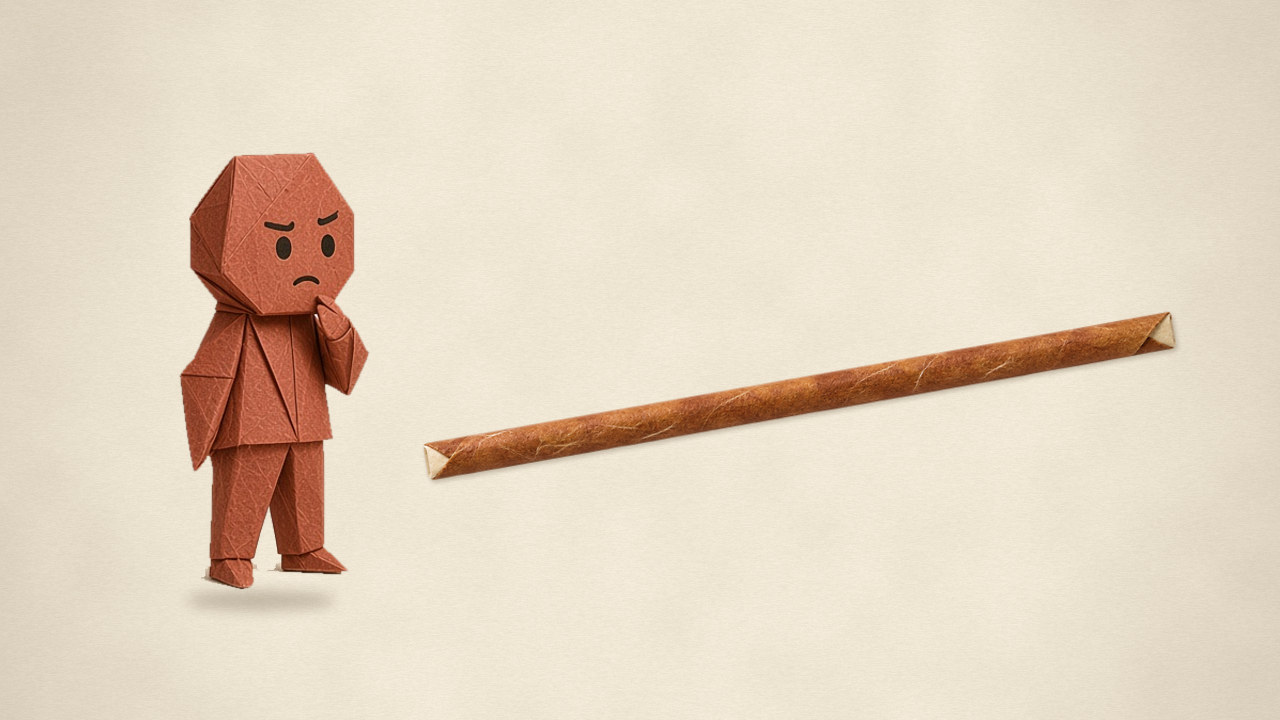
Snap a one-metre stick at two random points. What is the chance the three pieces make a triangle?
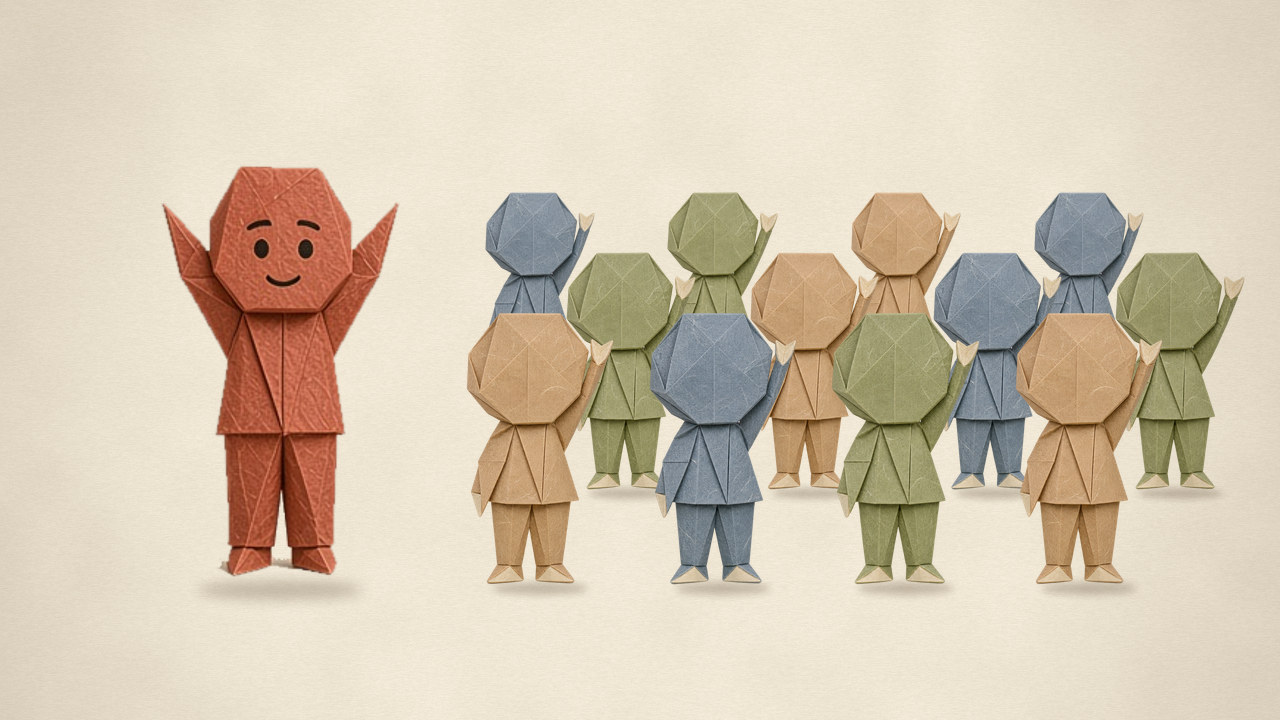
A hundred people in a room, 99% of them left-handed. How many left-handers must leave to bring that down to 98%?
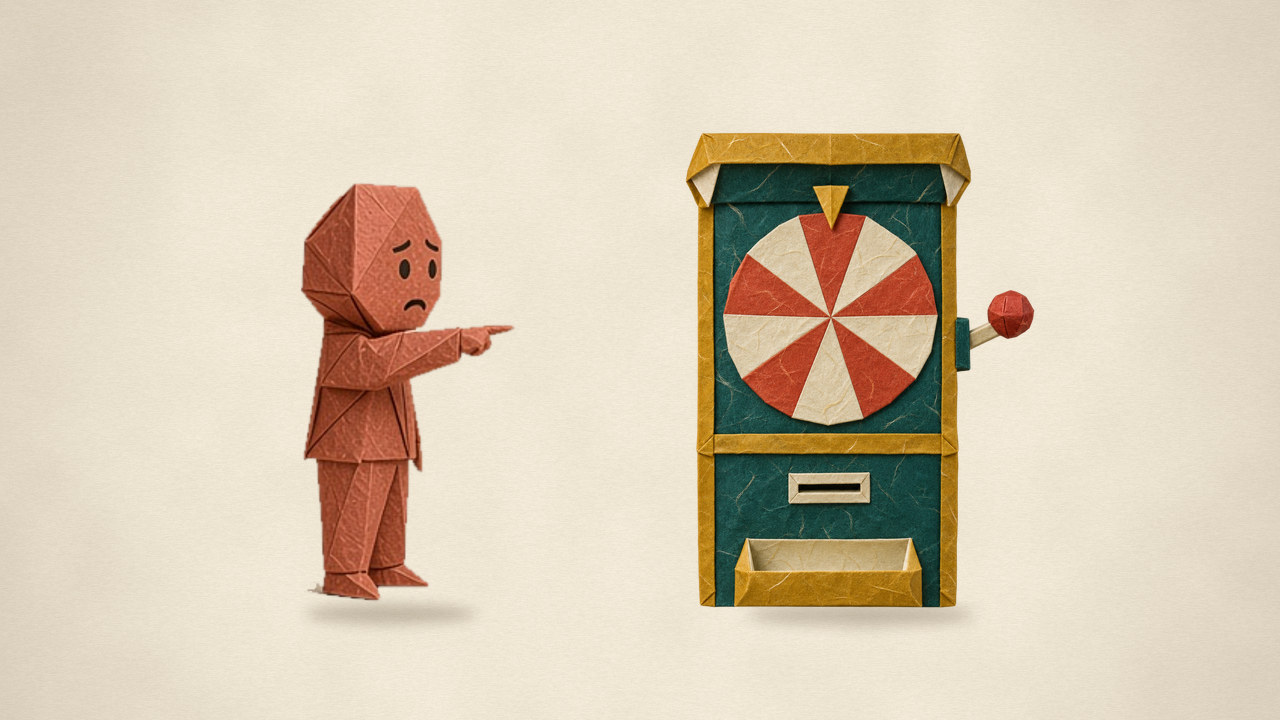
A casino machine pays you the number you name if it spins the same one, from one to ten. What is the fair price to play?
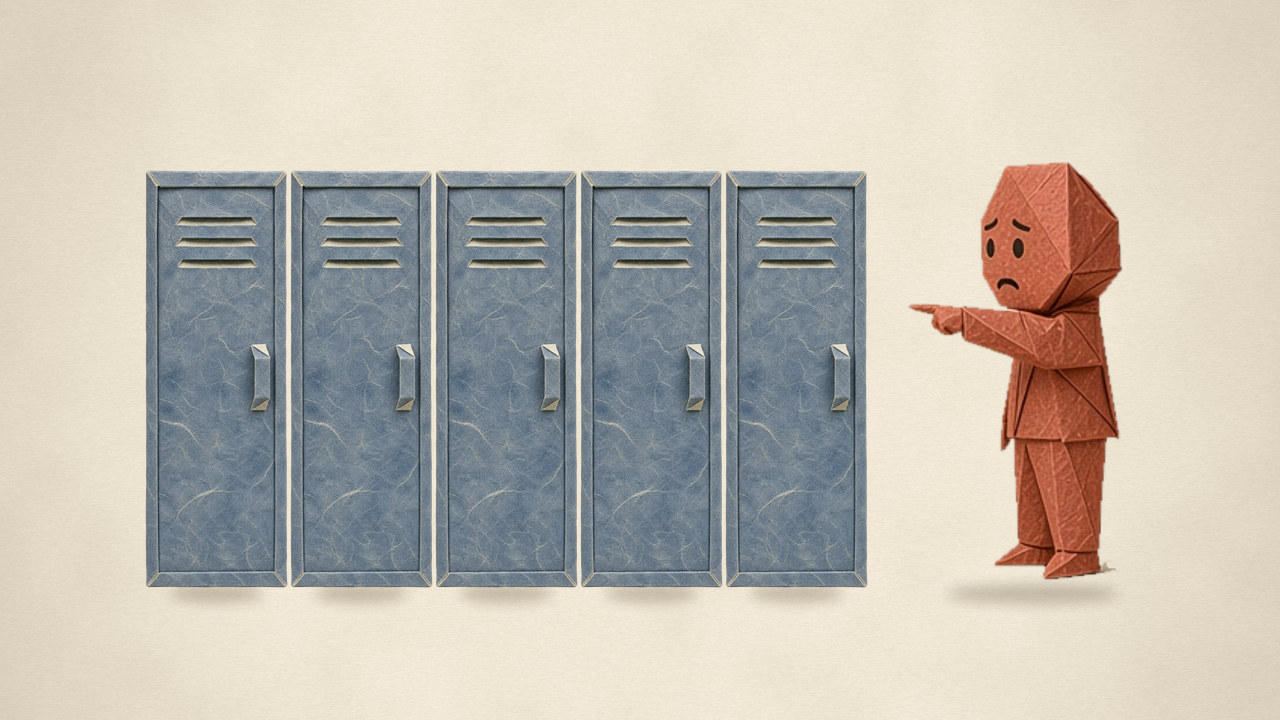
A thousand closed lockers. Student 1 toggles every locker, student 2 every second one, student 3 every third, up to student 1000. Which are left open?
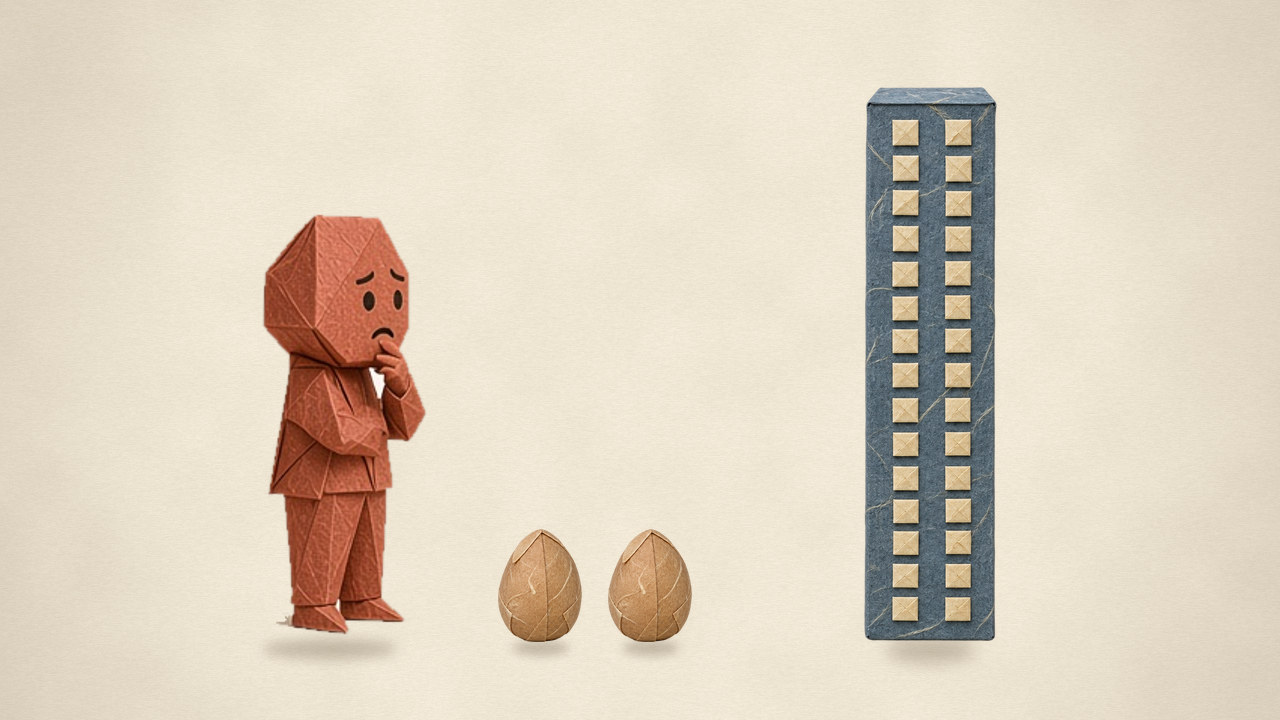
Two eggs, a hundred floors, and a floor above which an egg breaks. Find it in as few drops as possible, counting the worst case.
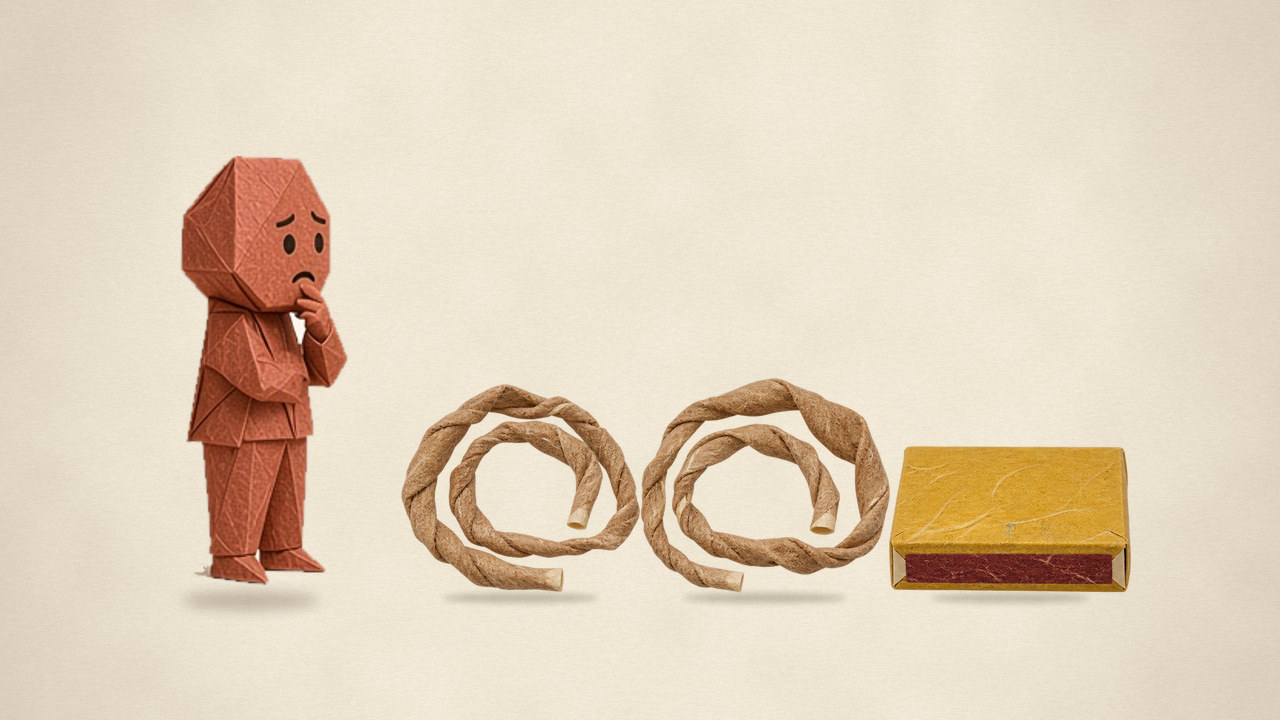
Two fuses that each burn for an hour, but not evenly. Matches, and no clock. Measure exactly 45 minutes.
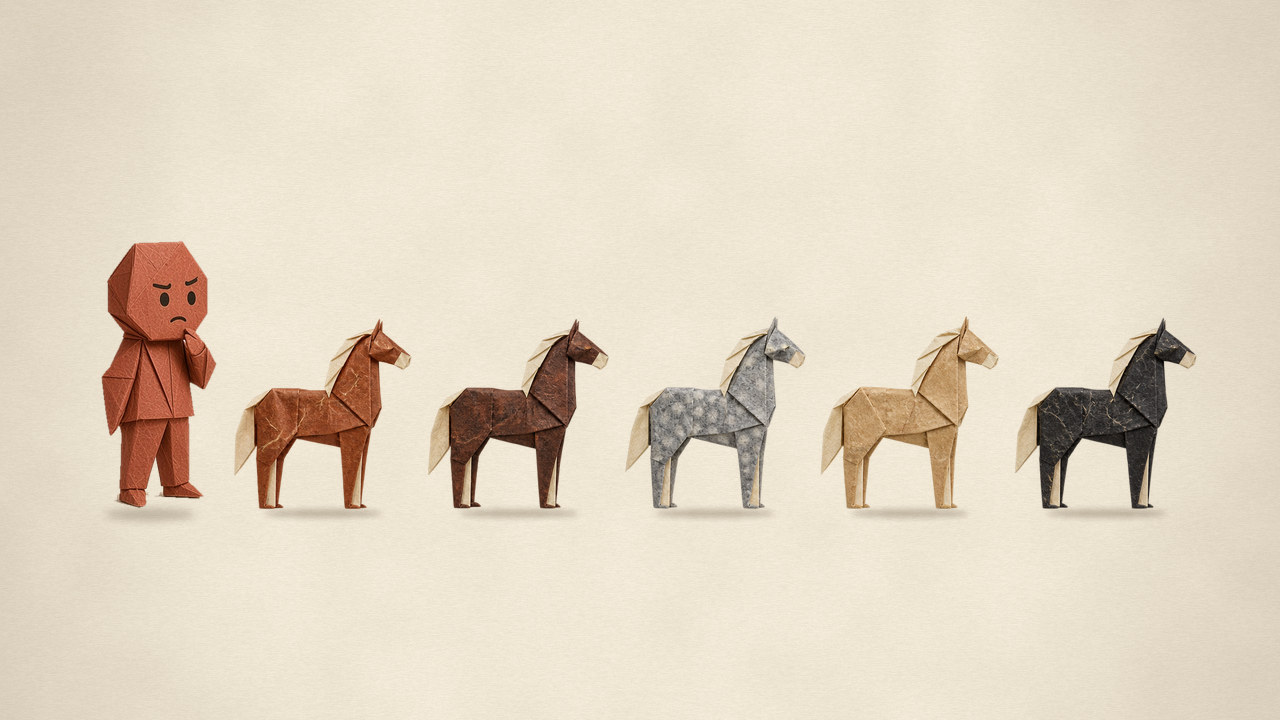
Twenty-five horses, a track with five lanes, and no stopwatch. How few races do you need to find the three fastest?
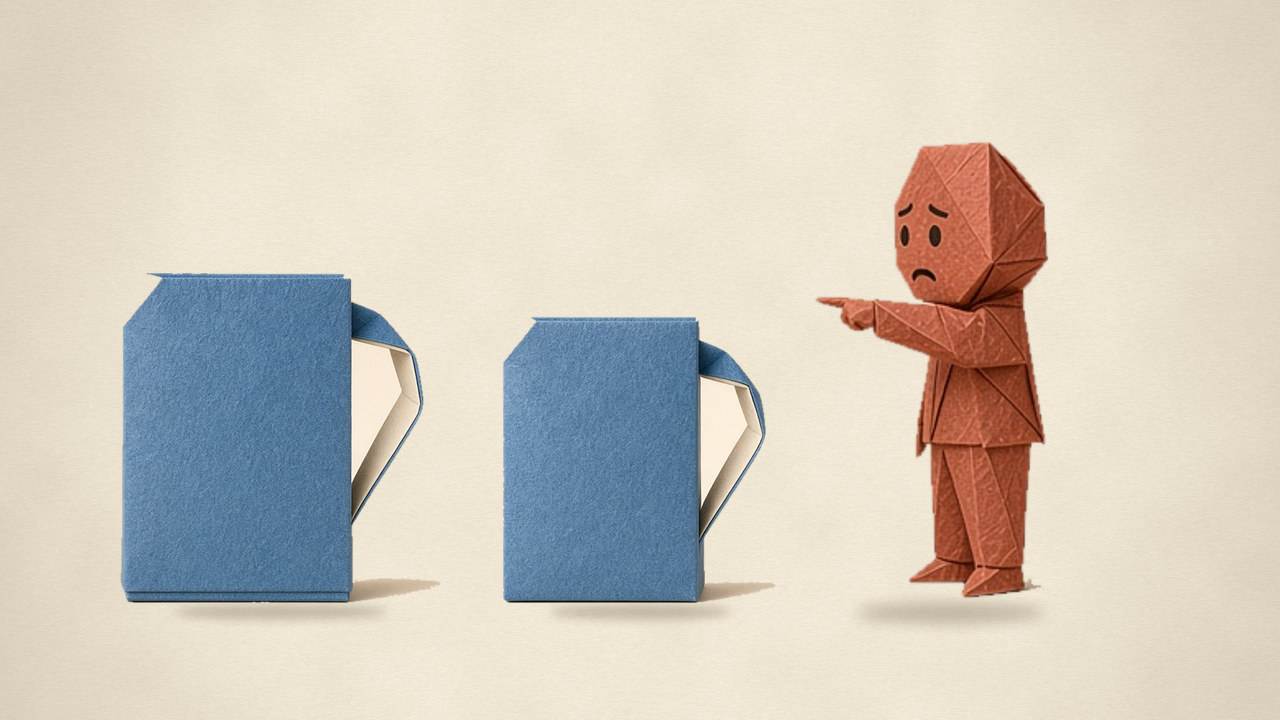
A three-litre jug, a five-litre jug, a tap and a drain. Measure exactly four litres.
Brain-teasers, worked all the way through.
Each film takes one puzzle — a man caught in a tunnel, a thousand bottles and ten tasters, cans of fuel scattered round a racetrack — sets it up, stops and asks you the question, and only then goes after the answer.
Where there are two ways to get there, you get both: the one that works, and the one that makes it obvious. Seeing the same answer arrive twice, by arguments that look nothing alike, is what makes it stick. Where there is only one good way, you get that one, properly, instead of a second dressed up to look like a choice.
Nothing is hand-waved. Every number on screen comes out of a simulation that checks its own claims before a frame is rendered, and when a puzzle is impossible the film proves it rather than just failing at it a few times.
It all happens in folded paper: real origami, photographed, cut out and animated. The music is written for each episode.
Pause when the question card appears. That bit is for you.
The series needs two honestly different routes to one answer: a brute-force route the viewer could have found themselves, and an elegant route that makes the answer obvious. The elegant route is almost always one of five moves: